A Landscape of Self Care
A Landscape of Self Care undersøger makeup som transformation, camouflage, ritual og visuel markør og kredser samtidig om, hvordan samtidens skønhedskultur er forbundet med digitale billedstrømme, kollektive idealer og forventninger til synlighed og selvfremstilling. Samtidig undersøges makeupens typologier og selvplejeritualer som æstetiske, kulturelle og politiske praksisser i en urban og global samtid. Udstillingen kredser om, hvordan makeup og kropsudsmykning på tværs af tid har fungeret som æstetiske, spirituelle og kulturelle praksisser knyttet til beskyttelse, identitet, fælles erindring og social tilknytning.
På udstillingen lader Kristine Hymøller sig inspirere af oldtidens brug af kohl eyeliner, rød okker, pigmenter og ceremonielle kropsmarkeringer i oprindelige ritualpraksisser samt af totemfigurer som hellige symbolske objekter, der historisk har repræsenteret slægters, klaners og stammers åndelige identitet og oprindelse, og som fungerer som kollektive identitetsmarkører og sociale samlingspunkter.
Udstillingen tager afsæt i makeup som en symbolsk, performativ og ritualiseret praksis, hvor kroppen fungerer som et felt for koder, identitet og tilhørsforhold. Her bevæger makeup sig ud over det dekorative og fremstår som en markør for status og styrke samt for placering i fælles strukturer, med både et beskyttende og et disciplinerende potentiale. Dette kan forstås i forlængelse af antropologiske og historiske kropspraksisser, hvor udsmykning indgår som symbolske systemer knyttet til konflikter, ceremonier og overgangsritualer.
Med udgangspunkt i egne erfaringer undersøger Hymøller de facader og personaer, der formes og aktiveres i kulturelle sammenhænge. Siden teenageårene har hun interesseret sig for makeup og styling og undersøger, hvordan maskering former køn og identitet og anvendes i sociale rum.
Gennem grafiske greb, gentagelse, gnidning og aftryk samt inddragelse af stylingværktøjer – fra øjenbrynsskabeloner og mascara til anti-rynke patches, Nivea-creme og pigmenteksperimenter – undersøges makeupens strukturer, teknikker og tutorials som praksisser, der iscenesætter og regulerer selvet og fungerer som overflader for tegn og betydning. Tutorials som contouring og highlighting skaber en billedlogik, hvor ansigtet opdeles, optimeres og korrigeres. Gennem faste trin og visuelle guides fremstår de som ritualer, hvor selvet formes mellem kollektive idealer og omgivelser.
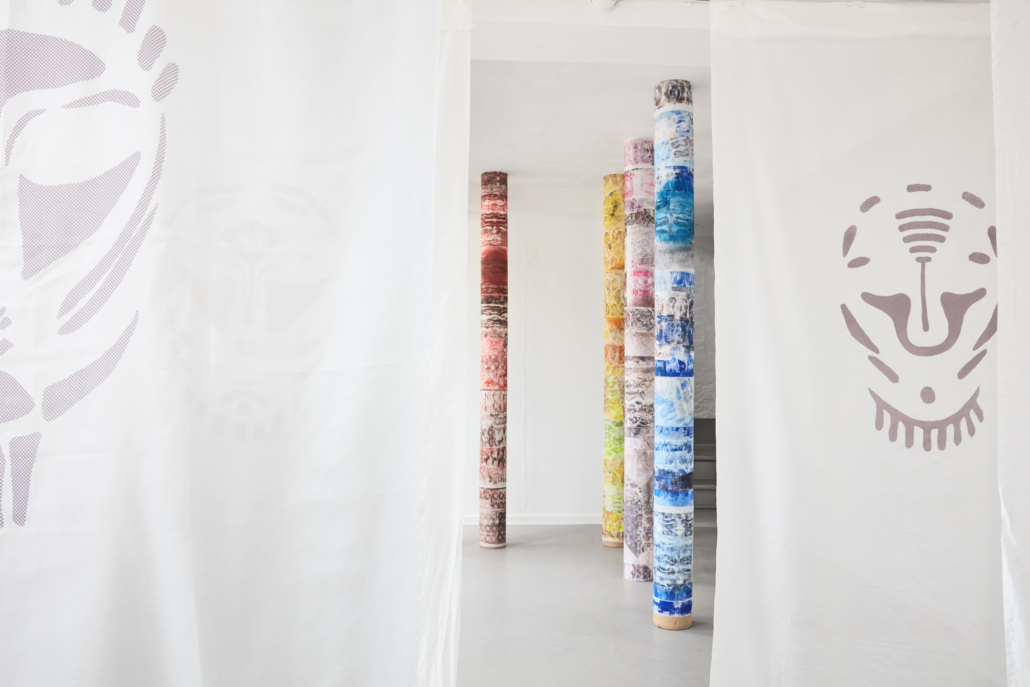
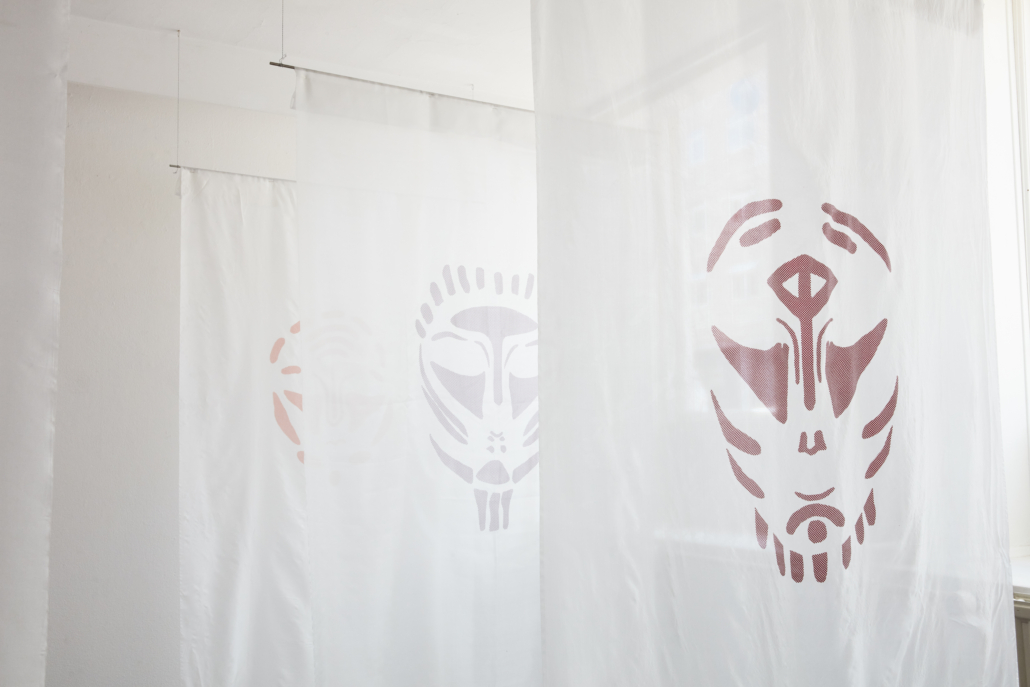
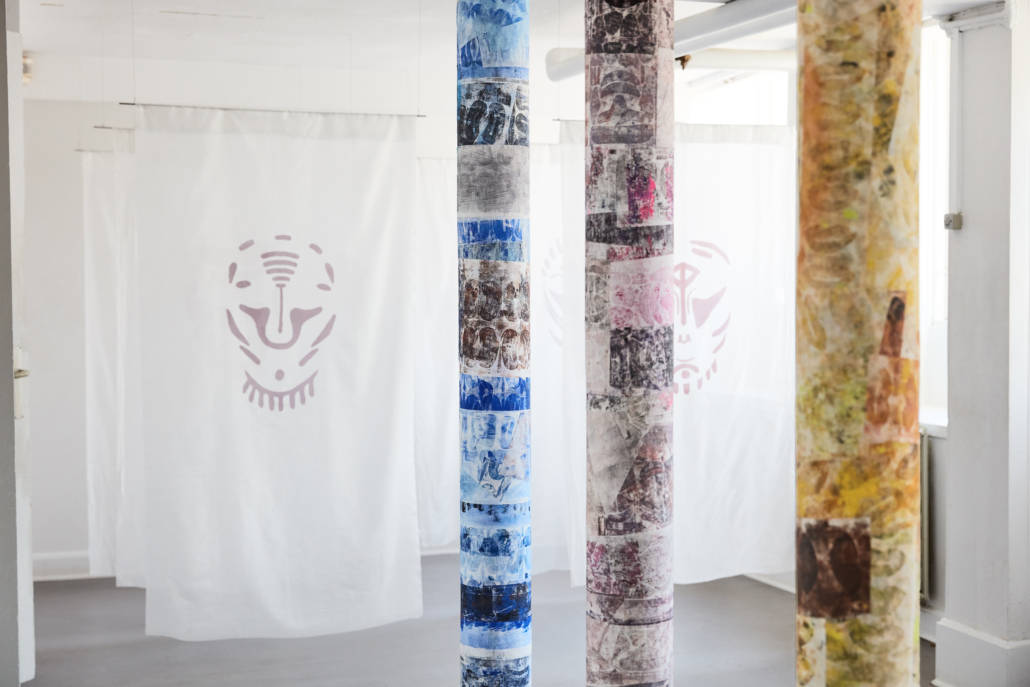
Værkerne indgår i dialog med husets arkitektur: tryk omslutter støberør fra det urbane landskab og rejser sig som totemlignende søjler, mens silke bærer maskesignaturer i transparente lag, der bevæger sig med rummet.
Udstillingen trækker paralleller til historiske ritualer – krops- og ansigtsudsmykning i forhistoriske stamme- og krigerkulturer, hvor tegn både markerede identitet, beskyttede og udtrykte magt. Totemisme træder frem som en symbolsk struktur og typologi, hvor krop, køn, tegn og fællesskab flettes sammen og åbner et rum, der på tværs af historie og samtid forbinder makeup-ritualer, digitale billedkulturer og miljø i lag af tryk og skulpturelle elementer.
Udstillingen er støttet af Statens Kunstfond, Knud Højgaards Fond, Dansk Tennis Fond & Rådet for Visuel Kunst.
A Landscape of Self Care explores makeup typologies and self-care rituals as aesthetic, cultural and political practices. The exhibition examines makeup as transformation, camouflage, ritual and visual marker, while considering how contemporary beauty culture is connected to digital image flows, collective ideals and expectations surrounding visibility and self-presentation. It also explores how makeup and body adornment, across different periods of time, have functioned as aesthetic, spiritual and cultural practices associated with protection, identity, collective memory and social belonging.
Hymøller draws inspiration from ancient practices such as the use of kohl eyeliner, red ochre, pigments and ceremonial body markings in Indigenous ritual traditions, as well as from totem figures as sacred symbolic objects. Historically, these have represented the spiritual identity and origins of families, clans and tribes, functioning as collective identity markers and points of social gathering.
The exhibition approaches makeup as a symbolic, performative and ritualised practice in which the body becomes a field of codes, identity and belonging. Moving beyond its decorative function, makeup emerges as a marker of status and power, as well as a means of positioning oneself within shared social structures, carrying both protective and disciplinary potential. These perspectives relate to anthropological and historical bodily practices in which adornment forms part of symbolic systems associated with conflict, ceremonies and rites of passage.
Drawing on personal experience, Kristine Hymøller explores the façades and personas that are shaped and activated within cultural contexts. Since her teenage years, she has engaged with makeup and styling, examining how masking shapes gender and identity and operates within social spaces.
Through graphic gestures, repetition, rubbing and imprints, alongside the use of styling tools — from eyebrow stencils and mascara to anti-wrinkle patches, Nivea cream and pigment experiments — the works explore the structures, techniques and visual languages of makeup. Tutorials are approached as practices that stage and regulate the self, creating surfaces for signs and meaning. Techniques such as contouring and highlighting establish a visual logic in which the face is divided, optimised and corrected. Through fixed sequences and visual guides, they emerge as rituals in which the self is shaped between collective ideals and social environments.
The works engage in a dialogue with the architecture of the exhibition space: prints wrap around casting tubes drawn from the urban landscape, rising as totem-like columns, while silk carries mask-like imprints in transparent layers that move through the space.
The exhibition draws parallels with historical rituals, including bodily and facial adornment in prehistoric tribal and warrior cultures, where markings served to identify, protect and express power. Totemism emerges as an underlying symbolic structure and typology in which body, gender, signs and community intertwine. Across historical and contemporary contexts, the exhibition brings together makeup rituals, digital image cultures and the urban environment through layers of prints and sculptural elements.
The exhibition is supported by Statens Kunstfond, Knud Højgaards Fond, Dansk Tennis Fond and Rådet for Visuel Kunst.